What to Do When Your Car Engine Overheats
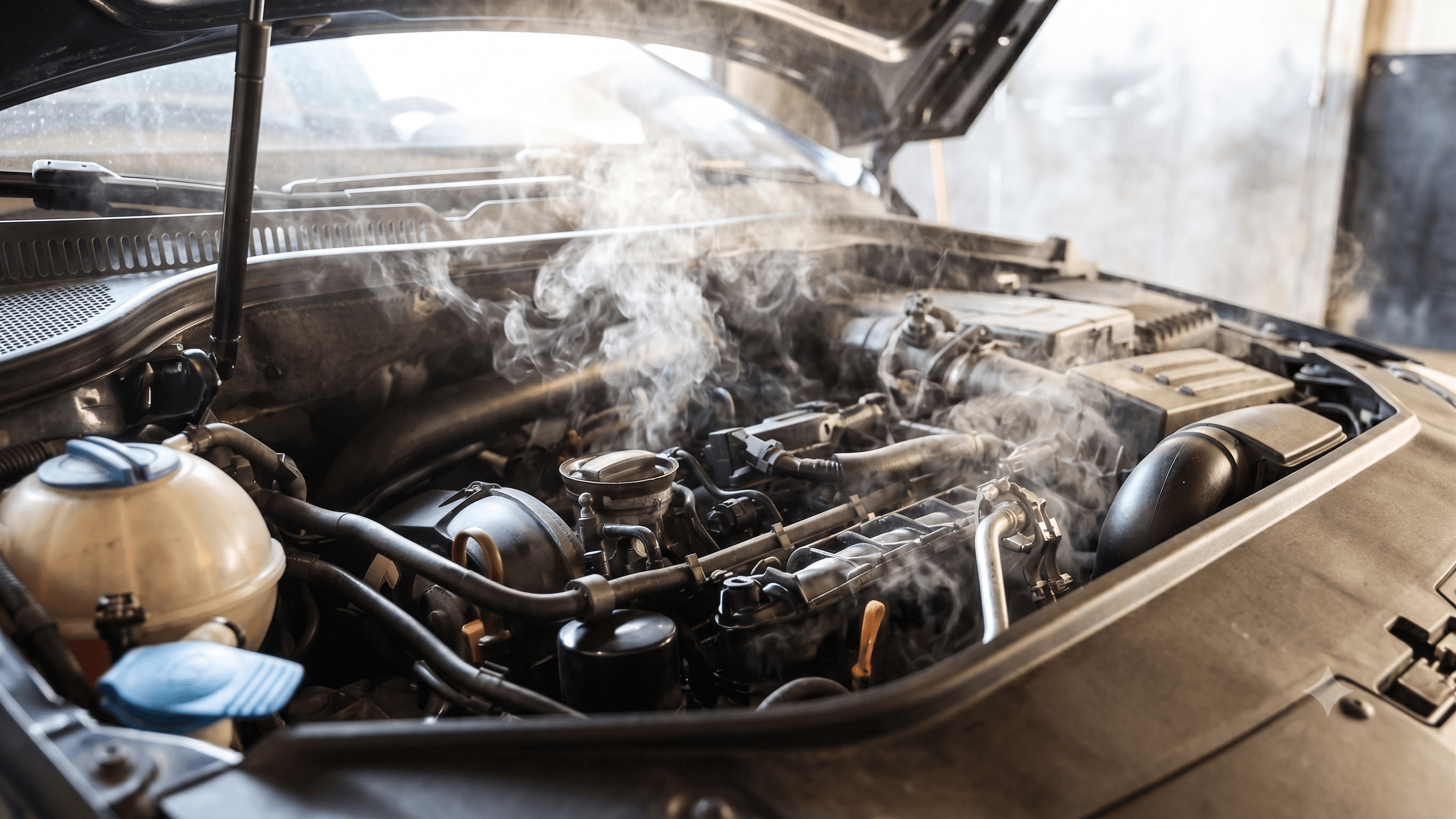
The temperature gauge climbs into the red. You notice steam rising from under the bonnet. The engine feels wrong: louder, harsher, hotter. Engine overheating is one of the most stressful situations a driver can face. But what you do in the next few minutes matters more than the warning itself. Reacting correctly can prevent severe and expensive damage.
This guide explains exactly what to do if your car overheats, what causes it, and how to prevent it from happening again.
First signs your engine is overheating
Overheating rarely happens without warning. Learning to recognise the early signs can save your engine.
Temperature gauge in the red
The temperature gauge shows how hot your engine is running. If it moves into the red zone, your engine is overheating.
Don’t wait for steam to rise or warning lights to escalate further. If the needle is rising quickly, act immediately.
Steam or smoke rising from the bonnet
Steam is the most common visible sign. It usually comes from coolant boiling over.
Smoke may indicate something more serious, such as oil or rubber components overheating. Either way, stop driving immediately.
Unusual smells or engine sounds
A sweet smell often signals leaking coolant. A burning rubber smell suggests heat affecting hoses or belts. Knocking or strained engine noise means the engine is under thermal stress.
These are early warning signs of what causes a car engine to overheat.
What to do immediately: step by step
We hear you asking: ‘What should I do if my car overheats?’ Well, stay calm, and follow these steps carefully.
Switch off the air conditioning
Turn off the air conditioning immediately. It places an extra load on the engine.
If possible, turn the heater on full. It helps draw heat away from the engine.
Pull over safely and switch off the engine
Find a safe place away from traffic. Do not continue driving.
Switch off the engine completely and engage the handbrake. Even a short distance can cause serious damage when the car is overheating.
Do NOT open the bonnet immediately
Wait at least 30 minutes before opening the bonnet, or until the engine has fully cooled and there is no steam.
Opening it too early risks exposure to pressurised hot steam or coolant. Never open either the radiator cap or the coolant reservoir cap while the engine is hot.
Check coolant level once the engine has cooled
When the engine has fully cooled, check the coolant reservoir.
If the level is low, this is a likely cause of the overheating. Top up carefully using the correct coolant where possible.
Restart cautiously or call for assistance
If coolant has been topped up, there are no visible leaks, and the temperature stays normal, drive only to the nearest workshop. If the temperature rises again, stop immediately and call for assistance.
What can cause a car to overheat?
Understanding what causes a car engine to overheat helps prevent repeated issues.
Low or depleted coolant
The most common cause. Coolant absorbs engine heat and transfers it through the radiator. Without enough, heat builds up quickly.
Engine oil breakdown
Oil does more than lubricate. It also helps control heat inside the engine. Low or degraded oil increases friction, which raises temperature. Typically though, overheating is more commonly linked to the cooling system.
Thermostat or water pump failure
These parts regulate coolant flow. If they fail, coolant cannot circulate properly, and heat builds up rapidly.
Radiator blockage or damage
A blocked or leaking radiator cannot release heat efficiently. This is common in older vehicles or poorly maintained systems.
Malaysia's climate and stop-start traffic
Tropical heat combined with heavy congestion in Kuala Lumpur, Penang and Johor Bahru places constant thermal stress on engines.
Long idling times and high ambient temperatures increase the risk of overheating compared to cooler climates.
What happens if you ignore an overheating engine?
Driving while your engine is overheating can cause severe and permanent damage. This is what happens when a car overheats and the warning is ignored.
Warped cylinder head
Excess heat can warp metal components in the engine head, leading to compression loss and expensive repairs.
Blown head gasket
One of the most common failures. A blown gasket allows coolant and oil to mix, leading to contamination and internal damage.
Seized engine
In extreme cases, metal components expand and lock together. This can result in complete engine failure and replacement.
How to prevent your engine from overheating
Prevention is far simpler than repair.
Check and flush your coolant regularly
Coolant degrades faster in Malaysia's climate. Check levels monthly. When it comes to flushing, follow the vehicle owner’s manual and coolant type, typically every 2–5 years.
Keep engine oil topped up and fresh
Fresh oil reduces friction and helps manage heat. Use a quality formulation such as Motul engine oil range for consistent thermal protection.
Inspect the thermostat, radiator and hoses
Look for cracks, leaks or slow response from the thermostat during servicing. Small faults can quickly lead to overheating.
Why choose Motul for engine protection
Motul develops fluids designed for high thermal stress and demanding driving conditions.
Engine oils built to resist heat breakdown
Motul engine oils maintain stability under high temperatures, helping reduce friction and protect critical components during stop-start driving.
Coolants engineered for tropical climates
Motul coolant formulations are designed for high-temperature environments like Malaysia, ensuring stable heat transfer and corrosion protection.
>> Explore Motul Coolants & Antifreezes
Frequently Asked Questions
Can I drive my car after it overheats?
Only if the temperature has stabilised and coolant levels are corrected. If overheating returns, stop driving immediately.
How long should I wait before opening the bonnet?
At least 30 minutes, or until otherwise advised by expert roadside assistance.
Can low engine oil cause my car to overheat?
Yes. Low or degraded oil increases friction and heat inside the engine.
How often should I change my coolant in Malaysia?
Follow the vehicle owner’s manual and coolant type, typically every 2–5 years.
Is it safe to add water instead of coolant in an emergency?
Distilled water can be used temporarily, but it does not provide corrosion protection and must be replaced with proper coolant as soon as possible.