Semi Synthetic vs Fully Synthetic Oil: Which Is Better for Your Engine?
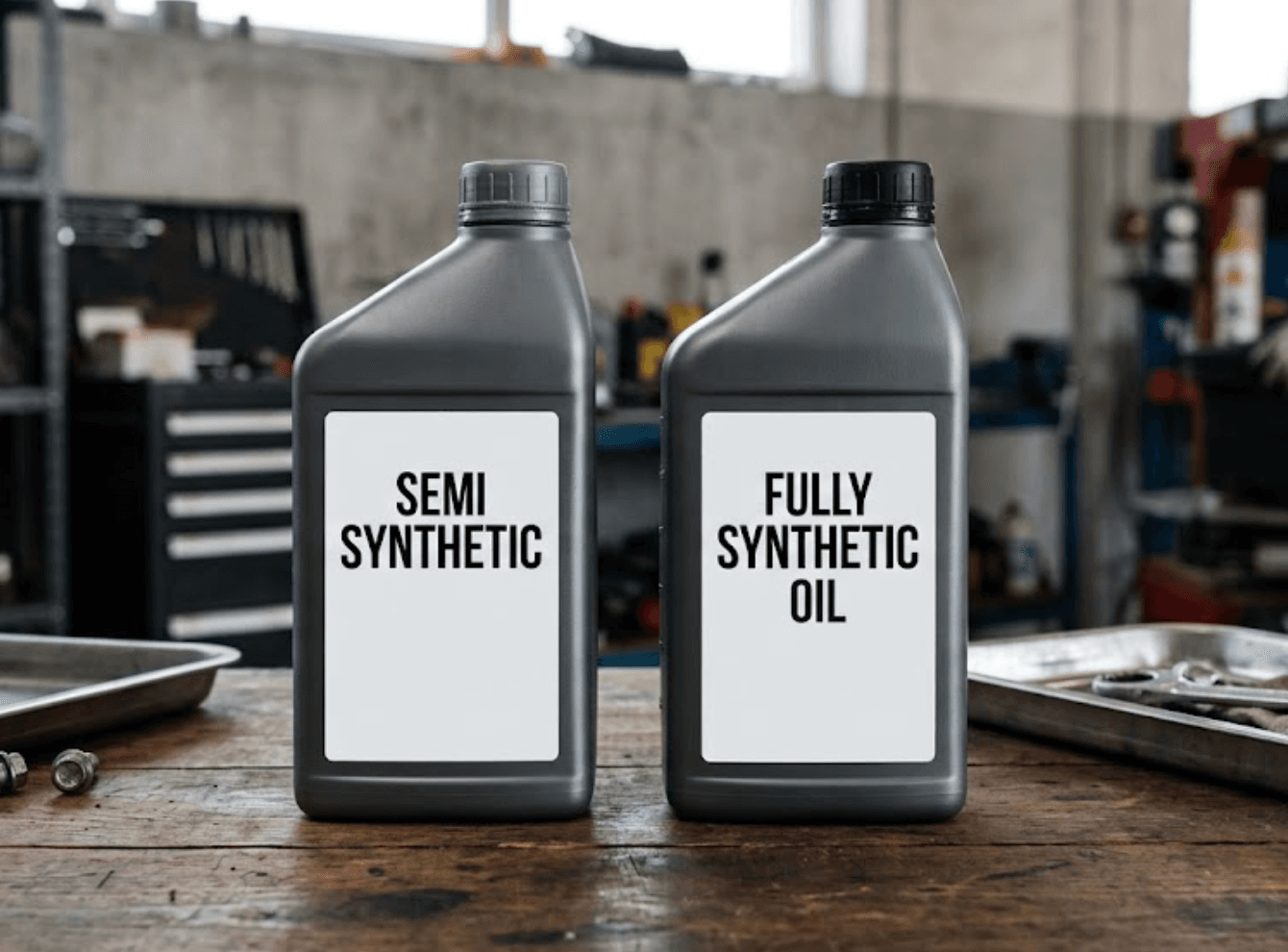
You are standing at the workshop counter looking at two oil options. One is semi-synthetic. The other is fully synthetic. The fully synthetic oil costs more, so the question is simple: is the extra cost worth it?
For Malaysian drivers and riders, the answer depends on how the vehicle is used. Daily traffic in Kuala Lumpur, long highway journeys and year-round heat all place demands on engine oil.
This guide breaks down semi-synthetic vs. fully synthetic oil in practical terms, helping you choose the right option for your engine and budget. Be sure to cross-check the guidance on this page with your owner’s manual for the required specification.
Semi synthetic vs fully synthetic oil at a glance
Feature | Semi-synthetic oil | Fully synthetic oil |
| Base oil | Mineral oil blended with synthetic oil | Fully synthetic base oils |
| Heat resistance | Good | Excellent |
| Cold flow | Good | Excellent |
| Oxidation resistance | Moderate | High |
| Service interval | Typically 5,000 to 7,500 km (Broad guidance only - owner’s manual should always be the final reference) | Typically 10,000-15,000 km (Broad guidance only - owner’s manual should always be the final reference) |
| Price | Lower upfront cost | Higher upfront cost |
| Best fit | Older vehicles, moderate use | Modern engines, turbos and demanding conditions |
The difference between semi-synthetic and fully synthetic oil is not simply about price. It is about how the oil performs under heat, load and time.
What is semi-synthetic oil?
Semi-synthetic oil combines mineral oil, synthetic base oil and additives to improve performance and protection.
How it is made
A typical semi-synthetic formulation often contains around 10-30% synthetic content blended with refined mineral base oils and additive technology.
Where it earns its place
Semi-synthetic oil remains a practical choice for:
- Older engines
- Daily commuting
- Moderate driving conditions
- Shorter service intervals
- Drivers seeking lower maintenance costs
For some vehicles, the difference between semi-synthetic oil and fully synthetic performance may not justify the additional expense. When the vehicle is driven primarily in predictable conditions and serviced regularly, a quality semi-synthetic oil can provide reliable everyday protection. Be sure to check your owner’s manual or the manufacturer's guidance for the exact oil requirement.
What is fully synthetic oil?
Fully synthetic oil uses chemically engineered base oils designed for consistent performance across a wide temperature range.
How it is made
Modern fully synthetic oils may use:
- Group III synthetic oils
- Group IV PAO base oils
- Group V ester-based oils
These technologies help deliver improved stability and protection under demanding conditions.
Where it earns its place
Fully synthetic oil is particularly suited to:
- Modern engines
- Turbocharged vehicles
- Stop-start city driving
- Long-distance highway travel
- High-temperature conditions
Many newer vehicles are designed around fully synthetic lubricants to help maximise efficiency, cleanliness and long-term durability.
Difference between full synthetic and semi synthetic oil
The difference between full synthetic and semi synthetic oil becomes most noticeable in everyday driving.
Heat resistance and oxidation
In heavy KL traffic, oil spends long periods operating under heat. Fully synthetic oils generally resist oxidation and thermal breakdown more effectively.
This is one of the clearest examples of the difference between fully synthetic oil and semi synthetic alternatives.
Cold start and flow
Fully synthetic oil typically reaches critical engine components faster during start-up, helping reduce wear and maintain smoother operation.
Wear protection and additive stability
Fully synthetic formulations tend to resist viscosity loss and additive breakdown more effectively between services.
This is another important difference between semi synthetic and fully synthetic oil.
Service interval
As a general rule:
- Semi-synthetic: 5,000 to 7,500km
- Fully synthetic: 10,000 to 15,000km
Always follow your vehicle manufacturer’s recommendations.
Price
Fully synthetic oil costs more per litre, but the longer service interval can help offset the difference over time. For many drivers, the cost per kilometre can be closer than expected.
>> Want longer-lasting protection? See Motul’s fully synthetic range [LINK]
Engine oil semi or fully synthetic: which should you choose?
When deciding between engine oil semi or fully synthetic, match the oil to your vehicle, driving habits and maintenance schedule.
For the daily KL commuter
Older vehicles may perform well with a quality semi-synthetic oil. Newer vehicles often benefit from a fuel-efficient, fully synthetic product such as Motul 8100 Eco-nergy or Motul Eco-tech.
For the family explorer
For long highway drives and full passenger loads, fully synthetic products such as Motul H-Tech 100 Plus provide consistent protection.
For the performance perfectionist
If you drive a tuned vehicle or attend Sepang track days, ester-based fully synthetic oils such as Motul 300V or Motul 8100 Power are designed for demanding operating conditions.
For the motorbike rider
Motul 7100 provides fully synthetic performance, while Motul 5100 offers a semi-synthetic alternative for riders seeking a balance between protection and value.
Can you mix or switch between them?
Mixing semi-synthetic and full synthetic oils is generally safe if both meet the required specifications, but this should really only be viewed as an emergency measure.
How Motul approaches synthetic oil engineering
Different vehicles require different solutions.
Motul’s Technosynthese® technology is used in selected semi-synthetic formulations to deliver enhanced protection and performance.
For drivers seeking maximum performance, Motul's Ester Core® technology draws on decades of motorsport expertise to provide strong film strength and durability under demanding conditions.
This technology helps maintain protection even when engines are exposed to sustained heat, high loads and challenging driving environments.
Frequently Asked Questions
Is fully synthetic oil really worth the extra cost?
For modern engines, turbocharged vehicles and drivers covering higher annual distances, fully synthetic oil often provides better long-term value.
Can I switch from semi to fully synthetic in the same engine?
Yes. Most vehicles can switch without issue provided the oil meets the correct specification and viscosity requirements.
Will fully synthetic oil cause leaks in an older engine?
No. Fully synthetic oil does not create leaks, although existing seal wear may become more noticeable.
How do I know if my motorbike needs semi or fully synthetic?
Check your owner’s manual and use an oil that meets the manufacturer’s specification.
Which lasts longer in heavy traffic?
Fully synthetic oil generally maintains its protective properties longer under sustained heat and stop-start driving conditions.