Mineral Oil vs Synthetic Oil vs Ester-Based Oils: What’s Best for Your Engine?

Choosing engine oil isn’t simply about price—it’s about how your engine feels, sounds and holds up over time. The type of oil you pour into your vehicle affects cold starts, fuel efficiency, wear protection and even long-term reliability. Understanding mineral oil v synthetic oil—and where ester-based oil fits in—helps you protect both your car and your hip pocket, especially in Malaysia’s heat and heavy stop-start traffic.
Below, we will break it down clearly and practically, then show why Motul’s synthetic and ester technologies are trusted for everything from daily commutes to extreme motorsport.
Comparing Your Oil Options at a Glance
Before diving deeper, here’s how the three main oil types compare when it comes to real-world performance.
| Feature | Mineral Oil | 100% Synthetic Oil | Ester-Core® Technology |
| Primary benefit | Basic lubrication at a lower cost | Long-term protection you can rely on | Maximum power with uncompromising protection |
| Fuel efficiency | Acceptable for light use | Noticeably smoother, more efficient running | Optimised flow for peak efficiency under load |
| Engine life | Basic wear control | Strong, consistent wear protection | “Cling-on” oil film for near zero-wear starts |
| Heat performance | Breaks down under sustained heat | Maintains stability in high temperatures | Built to survive extreme heat and endurance racing |
| Origin | Refined from crude oil | Precisely engineered in the lab | Advanced organic chemistry developed in motorsport |
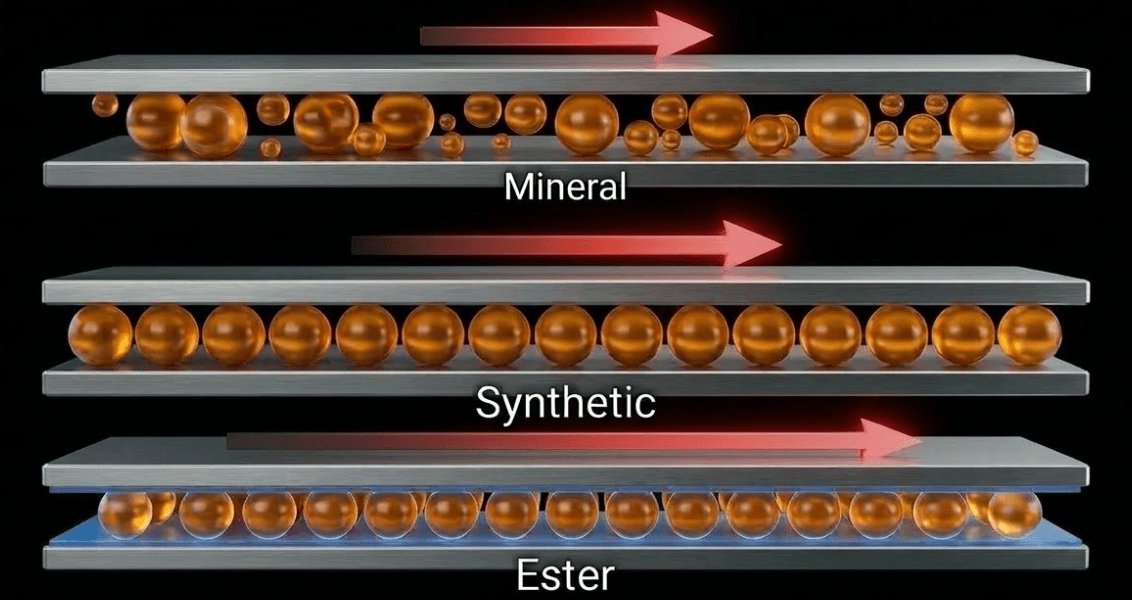
| Molecular structure | Naturally inconsistent | Uniform and stable | Polarised molecules that bond to metal surfaces |
| Motul example | Motul 2000 / Multigrade | H-TECH / 8100 Series | 300V / 8100 POWER |
This comparison shows why oil choice matters far beyond cost alone.
The Basics: Understanding the “Base” of your Oil
Mineral Oil:
Mineral oil is the traditional option, refined directly from crude oil. It offers basic lubrication and is often suitable for older engines or simple run-in periods. However, its inconsistent molecular structure means it breaks down faster under heat and heavy use.
Best for: older vehicles, light use, tight budgets
Trade-off: shorter oil life and lower protection
Synthetic Oil:
Synthetic Oil is engineered for consistency. Uniform molecules resist heat, oxidation and shear, meaning the oil stays stable for longer. This makes synthetic oil the modern standard for most cars on the road today.
Best for: modern cars, family vehicles, daily driving
Trade-off: higher upfront cost than mineral, but better long-term value
Ester-Based Oil:
Ester-based oil is the gold standard. Born in motorsport, esters are a high-end class of synthetic oil designed for extreme stress, heat and performance.
Best for: high-performance engines, enthusiasts, demanding conditions
Trade-off: premium pricing for premium capability.
Ester-based oil vs synthetic
It’s natural to ask about ester based oil vs synthetic. The key point: ester oils are synthetic—but taken further.
What are esters in oil?
Esters are organic compounds with polar molecules, meaning they’re naturally attracted to metal surfaces. This creates a strong, cling-on film that stays in place even when the engine is switched off.
Why ester oils outperform others
- Exceptional shear stability under load
- Strong resistance to oxidation
- Consistent protection at extreme temperatures
That’s why ester technology is trusted in racing, endurance events and high-output road cars.
Which engine oil matches your driving style?
For the Family Explorer
The Driver: SUV and sedan owners focused on safe, stress-free journeys
Wants: Reliability and peace of mind
Recommendation: Full synthetic oils such as H-TECH 100 Plus or Power SUV.
Why: Synthetic molecules resist breakdown on long drives, keeping the engine quiet and smooth—helping you avoid the nightmare of a roadside breakdown with the family onboard.
For the Performance Perfectionist
The Driver: Enthusiasts with tuned cars or premium imports.
Wants: Pride, power and precision
The Recommendation: Ester-Core® technology like Motul 300V or Motul 8100 POWER.
Why: Esters cling to metal parts, delivering near zero-water starts and maximum horsepower. The engine sounds tighter, sharper and more alive under load.
>> See the Motul 8100 POWER 0W-20
For the Daily Hustle
The Driver: Commuters battling KL’s heavy stop-start traffic and rising fuel costs
Wants: Efficiency and lower running coasts
Recommendation: Technosynthese® and fuel-economy oils like Eco-Tech or NGEN Hybrid
Why: Low-friction synthetic oils help the engine turn more easily, saving fuel in heavy traffic and reducing wear during constant starts and stops.
Why Motul uses ester core technology
Used in top-tier products like Motul 300V
Motul pioneered ester technology in motorsport. Ester Core® formulations deliver low volatility, exceptional stability and consistent performance lap after lap—or kilometre after kilometre.
Trusted by professionals and motorsport teams
From endurance racing to rally and OE partnerships, Motul oils are proven where failure isn’t an option. That same technology flows into everyday road oils.
Frequently Asked Questions
Is synthetic oil really better than mineral?
Yes, especially for modern engines. It lasts longer and protects better under heat.
Can I switch between mineral and synthetic oil?
In most cases, yes—but always follow manufacturer specifications.
How often should I change ester-based oil?
Follow service intervals, but ester oils typically maintain performance longer.
Is ester oil suitable for daily driving?
Absolutely—especially if you value smoothness, protection and longevity.
Will synthetic oil damage an older engine?
No, as long as the viscosity and specification are correct.