How to Clean Your Car’s Engine Bay
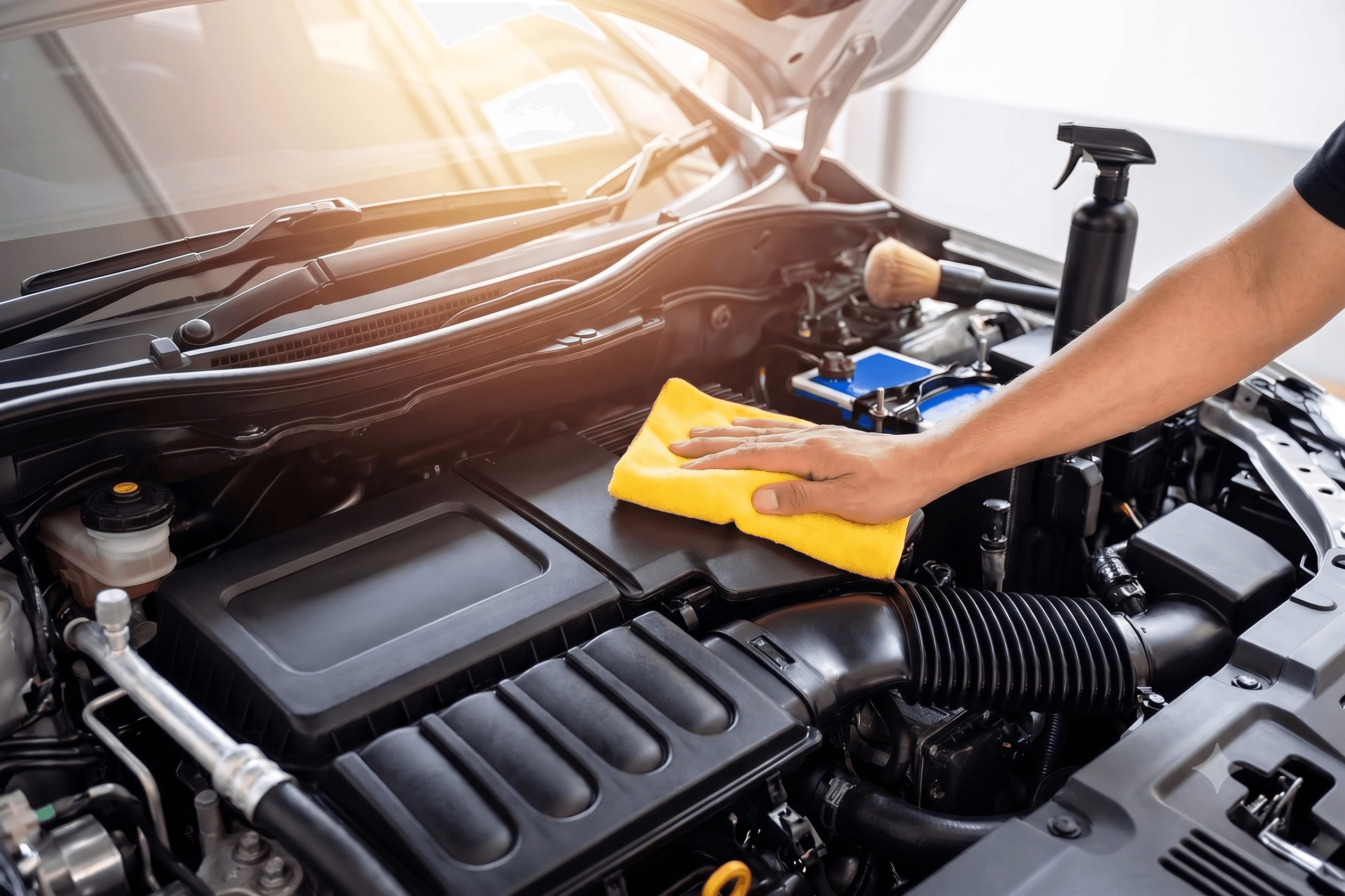
A clean engine bay isn’t just about appearance. It helps you hear changes in your engine more clearly, detect leakage, and remove potentially problematic build-up.
So, exactly how do you clean a car’s engine bay? Many drivers avoid engine cleaning because they’re worried about damaging electrical components or sensitive parts. The reality is simpler. With the right method and products, engine cleaning is safe, controlled and highly beneficial.
This guide explains how to clean an engine bay safely, what products to use, and the key areas to avoid during the process.
Why cleaning your engine bay matters
Engine bay cleaning is part of practical maintenance, not cosmetic detailing.
Better heat dissipation
Dirt, oil film and road grime act as insulation. They trap heat around the engine.
A clean surface allows heat to dissipate more effectively. In Malaysia’s hot climate, where engines already operate under thermal stress, this helps maintain more stable operating temperatures.
Easier to spot leaks and faults
A clean engine bay makes problems visible. Oil leaks, coolant seepage or cracked hoses stand out immediately on clean surfaces. When everything is covered in grime, these early warning signs are easy to miss.
You can link this directly to regular servicing habits, like how to check car engine oil and routine maintenance, such as how to complete an oil change.
Malaysia's climate accelerates the build-up
High humidity, heat and road dust mean engine bays in Malaysia accumulate grime faster than in cooler regions.
That means engine bay cleaning is not just optional maintenance; it keeps systems visible, stable and easier to inspect.
What you'll need before you start
Preparation matters as much as the cleaning itself. Here are some tips:
Safety first: Let the engine cool
Never clean a hot engine. Wait at least 30 minutes after driving. Hot components can cause burns, and sudden cooling can stress materials and seals.
Tools and materials
You don’t need specialist workshop equipment. Keep it simple and controlled:
- Engine degreaser
- Soft-bristle brushes
- Microfibre cloths
- Plastic bags or cling film
- Low-pressure hose or spray bottle
- Protective gloves
Step-by-step: How to clean your engine bay
Follow each step carefully and avoid rushing the process.
Cover sensitive components
Protect all electrical and sensitive areas before introducing any moisture.
Cover the battery terminals, fuse box, ECU, alternator and exposed wiring using plastic bags or cling film. This reduces the risk of water ingress.
Apply degreaser
Use a dedicated automotive engine bay cleaner or degreaser suitable for plastics, rubber and painted surfaces. Always follow the product label.
Agitate with a soft brush
Use a soft-bristle brush to work the degreaser into tight spaces.
Focus on hoses, brackets and recesses where dirt builds up. Avoid abrasive tools that can damage plastic or painted surfaces.
You should be able to feel the grime loosen as you work it in.
Rinse carefully with low pressure
Rinse using low-pressure water only. Work from top to bottom. Do not aim water directly at electrical components, sensors or the air intake.
Avoid pressure washers completely. They can force water into sealed areas.
Dry and inspect
Remove moisture using microfibre cloths or compressed air if available. Crucially, make sure to remove all plastic bags and protective covers before starting the engine.
Start the engine briefly to help evaporate remaining moisture.
Once dry, inspect hoses, belts and visible components. A clean engine bay makes it easier to hear subtle changes in engine sound or vibration.
Common engine bay cleaning mistakes to avoid
Before you start cleaning, it’s important to understand what can damage an engine bay during the process. These are some of the most common mistakes drivers make when cleaning a car engine:
- Using a high-pressure washer: This can force water into sensitive electronics
- Using household detergents: These can strip protective coatings and damage rubber
- Cleaning a hot engine: This increases the risk of burns and component stress
- Soaking electrical connectors, sensors or the ECU: Excess moisture can interfere with electrical systems
- Skipping the drying stage: This can lead to corrosion or electrical faults
How often should you clean your engine bay?
In Malaysia's tropical environment, every 6–12 months is a practical interval for most drivers.
If you frequently drive on dusty roads or off-road, more regular cleaning can help prevent heavy build-up and keep components clear for inspection.
A good time to clean is during routine servicing or alongside maintenance tasks like oil changes, when the engine is already being inspected.
Why choose Motul for engine maintenance
Motul develops maintenance products with the same engineering focus as its lubricants, designed to support long-term engine performance.
>> Explore the full Motul maintenance range for engine care solutions.
Motul products are designed to remove deposits effectively while protecting materials commonly found in modern engine bays.
Frequently Asked Questions
Is it safe to wash my engine bay?
Yes, if done correctly. The key is using low pressure, protecting electrical components and allowing the engine to cool first.
Can I use a pressure washer on my engine bay?
No. High pressure can force water into sensitive electrical systems and cause damage.
What is the best product to use for engine bay cleaning?
A dedicated engine degreaser is recommended. Avoid household cleaning products.
How do I protect electrical components when cleaning my engine?
Cover them with plastic bags or cling film, focusing on the ECU, fuse box, alternator and battery terminals.
How often should I clean my engine bay in Malaysia?
Typically, every 6–12 months, or more frequently if driving in dusty or harsh conditions.