How To Check Transmission Fluid
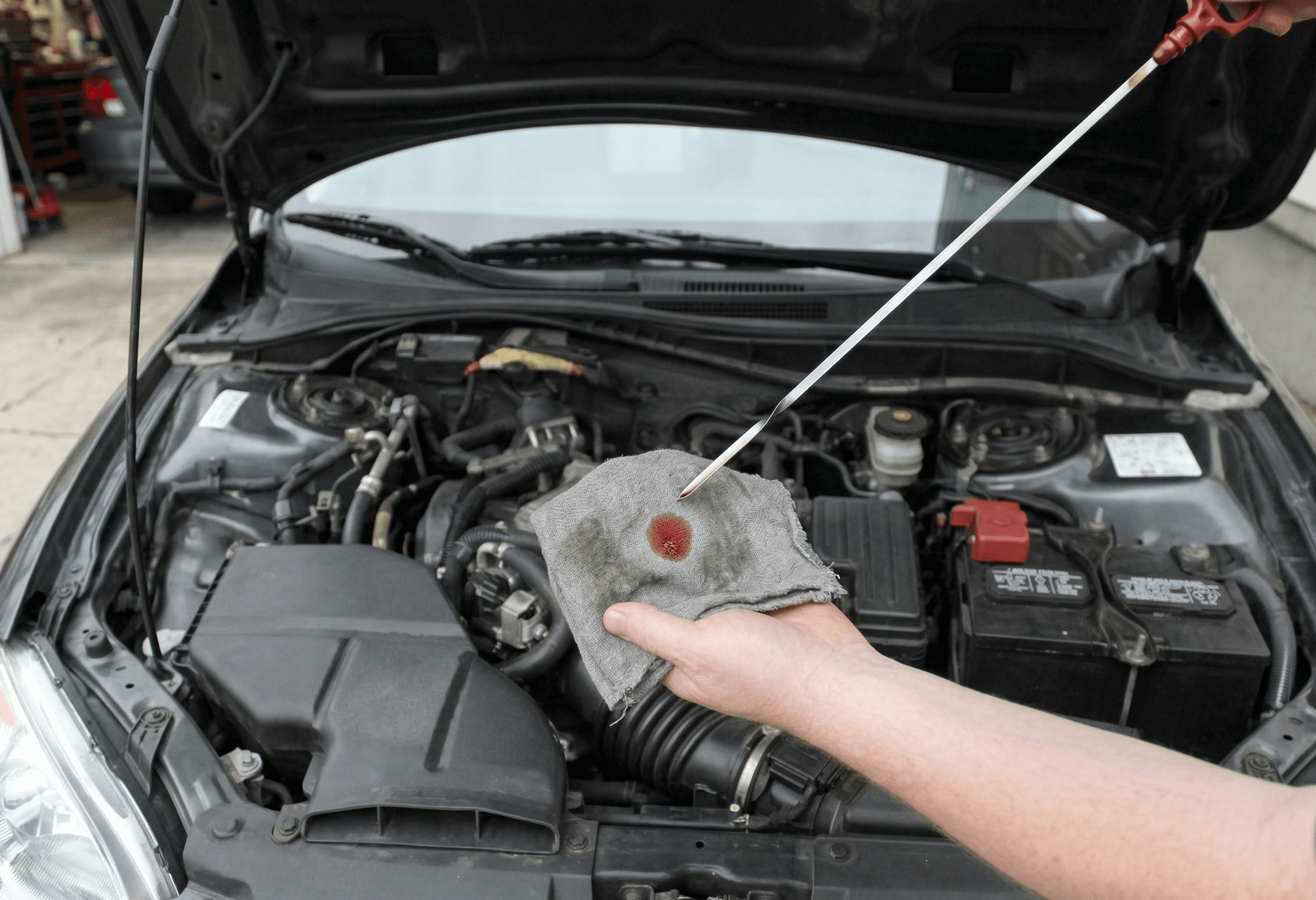
Knowing how to check transmission fluid is a practical skill that helps you maintain control over your vehicle’s performance. Transmission fluid plays a direct role in how your car shifts, responds and sounds during daily driving.
When levels are correct and the fluid is in good condition, gear changes feel smooth and consistent. When fluid is low or degraded, you may feel hesitation, rough transitions or delayed engagement.
In Malaysia’s driving conditions, where heat and traffic place continuous demand on the transmission, regular checks help prevent wear and maintain stable performance.
You can explore Motul products to ensure your vehicle uses the correct transmission fluid, and our general guide below will show you the safe way to go about checking it in your vehicle. And don’t forget to always refer back to your owner’s manual, as exact processes will vary between vehicle, system and manufacturer.
What does transmission fluid do?
Transmission fluid supports lubrication, cooling and hydraulic operation within the system.
Lubrication and protection
Transmission fluid reduces friction between gears, bearings and clutches. This protective layer prevents direct contact between metal components. Without it, wear increases quickly.
As lubrication declines, you may notice harsher engagement between gears. The transmission may feel less refined, particularly during acceleration or when shifting under load.
Heat management and performance
Transmission systems generate heat through constant movement and pressure.
Fluid absorbs and transfers this heat away from internal components.
When fluid is in good condition, the transmission operates within a stable temperature range. Gear changes feel controlled and consistent. If heat builds up due to degraded fluid, performance can become uneven and less predictable.
When should you check transmission fluid?
Routine checks help identify issues early and maintain consistent operation.
Regular maintenance checks
It is recommended to check transmission fluid every few months or during routine servicing.
Regular checks are especially important before long drives or during periods of frequent use, where the transmission operates under sustained load.
Warning signs of low transmission fluid
You may need to check levels immediately if you notice:
- Slipping gears
- Delayed or hesitant shifting
- Unusual noises during gear changes
- Sluggish response
If the transmission feels less precise or sounds strained, fluid level or condition may be affecting performance.
How to check automatic transmission fluid
Understanding how to check automatic transmission fluid correctly ensures accurate results and helps avoid misreading fluid levels. Always refer to your owner’s manual, as the process can vary between vehicle, system and manufacturer.
Prepare the vehicle correctly
- Park on a level surface
- Start the engine and allow it to idle
- Set the transmission to park or neutral, depending on manufacturer guidance
- Ensure the engine is at normal operating temperature
This setup ensures the fluid is circulating properly for an accurate reading.
Locate and remove the transmission dipstick
- Open the bonnet and locate the transmission dipstick (note: not all automatic transmissions have a dipstick)
- It is typically positioned near the rear of the engine bay
- Remove it carefully and wipe it clean with a cloth
The dipstick may be labelled or colour-coded for identification.
Check the transmission fluid level
- Reinsert the dipstick fully
- Remove it again and observe the markings
- The fluid level should sit within the recommended range indicated on the dipstick
This is the correct method for checking the automatic transmission fluid level. If the level is below the minimum mark, the system may not be receiving adequate lubrication.
Inspect fluid condition
- Observe the fluid colour
- Smell the fluid carefully
If the fluid appears dark or smells burnt, it may be degraded.
Fluid condition directly affects performance. Clean fluid supports smooth, quiet shifting. Degraded fluid can result in rougher engagement and delayed response.
How to check automatic transmission fluid level without a dipstick
Many modern vehicles use sealed transmission systems.
Sealed transmission systems
These systems do not include a dipstick. Fluid levels are checked through a service port, often requiring the vehicle to be raised and fluid temperature to be monitored during the process.
When to visit a mechanic
If your vehicle uses a sealed system, professional servicing is recommended. Accurate measurement requires specialised tools and procedures. Attempting to check without proper equipment may lead to incorrect readings and fluid levels.
Signs your transmission fluid needs changing
Monitoring fluid condition helps determine when a service is required.
Dark or burnt smelling fluid
As fluid ages, it becomes darker and may develop a burnt smell. This indicates oxidation and breakdown of additives, reducing its ability to lubricate and protect.
Shifting problems or delayed gear engagement
Worn fluid can affect how the transmission responds. You may notice:
- Slower gear engagement
- Rough or uneven shifting
- Reduced smoothness during acceleration
These changes in feel and sound indicate the fluid is no longer performing effectively.
Why high quality transmission fluid matters
Fluid quality has a direct impact on transmission durability and performance.
Advanced fluid formulations
High quality transmission fluids are engineered to:
- Maintain stable viscosity under heat
- Reduce friction between components
- Resist oxidation and breakdown
- Support smooth and consistent gear changes
This ensures reliable performance even in demanding driving conditions.
Motul transmission fluid technology
Motul develops transmission fluids designed for modern systems, including advanced automatic transmissions.
These formulations are tested to perform under high temperatures and continuous use. The focus is on maintaining consistent shifting behaviour and protecting internal components over time.
You can discover the range to select a fluid suited to your vehicle.
Why choose Motul transmission fluid for your car
Motul is a global specialist in high performance lubricants. Its transmission fluids are developed with precision, tested under demanding conditions and designed to support both everyday driving and performance applications.
Frequently Asked Questions
How often should transmission fluid be checked
Broadly, transmission fluid should be checked every few months or during routine servicing. Always refer to your owner’s manual.
Can I drive with low transmission fluid
Driving with low transmission fluid is not recommended. It can lead to poor shifting, overheating, and increased wear.
What colour should transmission fluid be
Fresh transmission fluid is typically red or light amber. Dark or burnt fluid indicates degradation.
Can I add transmission fluid myself
Yes, if your vehicle has a dipstick and you use the correct speciation. Avoid overfilling.
How often should transmission fluid be changed
Most vehicles require a transmission fluid change every 50,000km to 100,000km, depending on manufacturer recommendations. Always refer to your owner’s manual.