How to Do an Oil Change: Step-by-Step DIY Guide
Knowing how to do an oil change yourself is one of the most rewarding maintenance skills you can learn. Regular oil changes keep your engine running smoothly, sounding refined and protected against wear—especially in hot, stop-start driving conditions. When paired with a premium lubricant like Motul, a proper engine oil change doesn’t just maintain your car, it preserves long-term performance.
When and why to change your oil
Engine oil degrades over time as it absorbs heat, contaminants and moisture. Changing it on schedule is essential to avoid excessive wear and power loss.
How often should I change my oil?
Most cars require an oil change every 8,000-10,000km or six months, whichever comes first. Short trips, heavy traffic and high temperatures may require more frequent changes. Once you know how to change oil, it’s a relatively quick and simple process.
Symptoms of old or degraded oil
- Louder engine noise
- Sluggish acceleration
- Dark, thick oil on the dipstick
- Oil warning light
If you notice any of these, it’s time to change engine oil.
Tools and materials you’ll need
Basic tools
- Spanner or socket wrench
- Oil catch pan
- Funnel
- Jack and axle stands or ramps
- Gloves and rags
Materials
- Correct engine oil
- New oil filter
Motul Tip: Choosing the right oil and filter
Always match the oil specification and viscosity to your engine. Motul’s Oil Finder removes guesswork by recommending the exact oil for your vehicle.
>> Explore Motul’s automotive lubricant range
Step 1: Preparing your vehicle
Warm up your engine slightly
Run the engine for two to three minutes. Warm oil drains more efficiently—but avoid working on a hot engine.
Secure and lift the car safely
Park on level ground, engage the handbrake and use axle stands or ramps. Never rely on a jack alone.
H2: Step 2: Draining the oil
Position the drain pan correctly
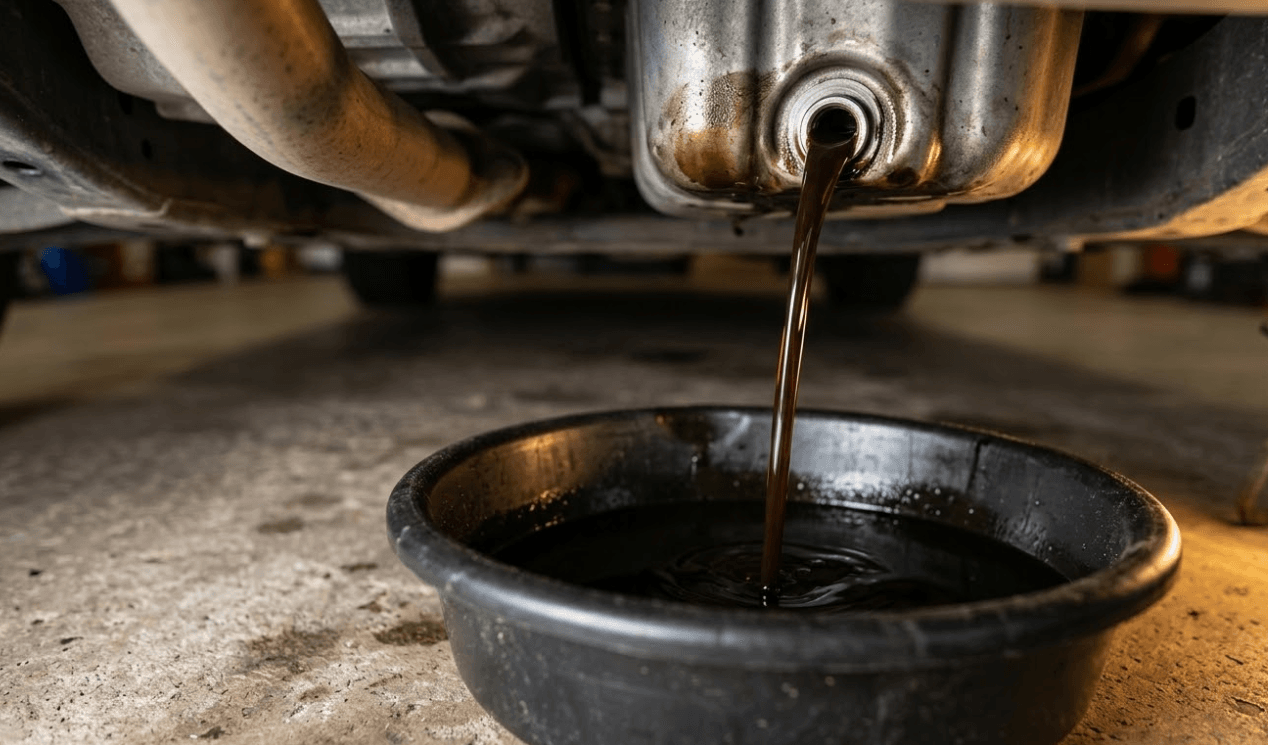
Locate the drain plug beneath the engine and position the pan directly underneath before loosening the plug.
Allow full drainage
Once the plug is removed, let the oil drain completely. While draining oil, waiting an extra few minutes ensures old oil and contaminants are fully removed—a key step often overlooked.
Step 3: Changing the oil filter
Lubricate the new filter’s O-ring
Apply a light coat of fresh oil to the rubber seal. This helps ensure a proper seal and makes future removal easier.
Don’t overtighten
Screw the filter on by hand until snug, then tighten a further quarter turn. Overtightening can damage seals and cause leaks.
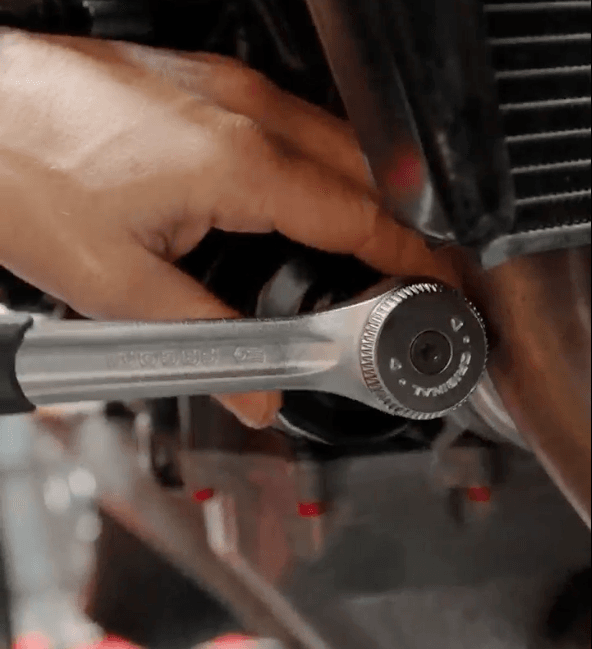
Step 4: Refilling with fresh oil
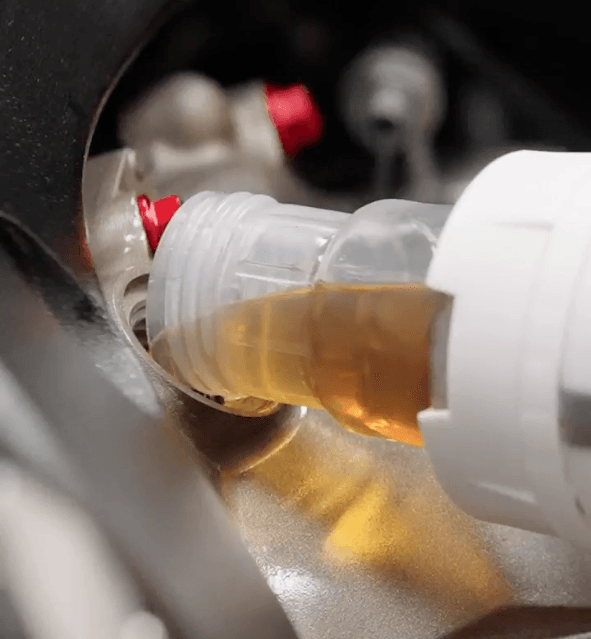
Add oil gradually
Pour in most of the required oil, then pause to check engine oil level with the dipstick. Top up slowly to avoid overfilling.
Run the engine and recheck level
Start the engine for one to two minutes, then switch it off and wait. Recheck the dipstick and adjust if needed.
Step 5: Properly disposing of used oil
Never pour oil down drains
Used oil is hazardous and illegal to dispose of this way. It contaminates water and soil.
Where to take used oil
Take it to a recycling centre, authorised workshop or participating auto retailer. Many accept used oil free of charge.
Common mistakes to avoid
Forgetting the drain plug or filter
Double-check both are installed securely before refilling. A missing plug leads to immediate oil loss.
Mixing oil grades or types
Mixing viscosities or formulations can compromise lubrication and performance. Always use the same specification throughout.
Why use Motul oil for your engine
Engineered for performance and protection
Motul oils provide stable lubrication, excellent temperature control and strong wear protection—helping your engine feel smooth and sound precise, even under load.
Trusted by motorsport and professionals
With decades of motorsport involvement and OE approvals, Motul products are tested in the harshest conditions before reaching your car.
Frequently Asked Questions
How long does an oil change take?
Changing engine oil takes around 30-45 minutes for most vehicles.
Can I reuse leftover oil next time?
Only if it’s unopened and stored correctly.
What happens if I overfill the engine oil?
Overfilling can cause foaming, pressure issues and seal damage.
Is synthetic oil better for all vehicles?
Most modern engines benefit from synthetic oil, especially in hot climates.
What should I do if the oil light stays on after a change?
Switch off immediately and recheck oil level, filter and drain plug.