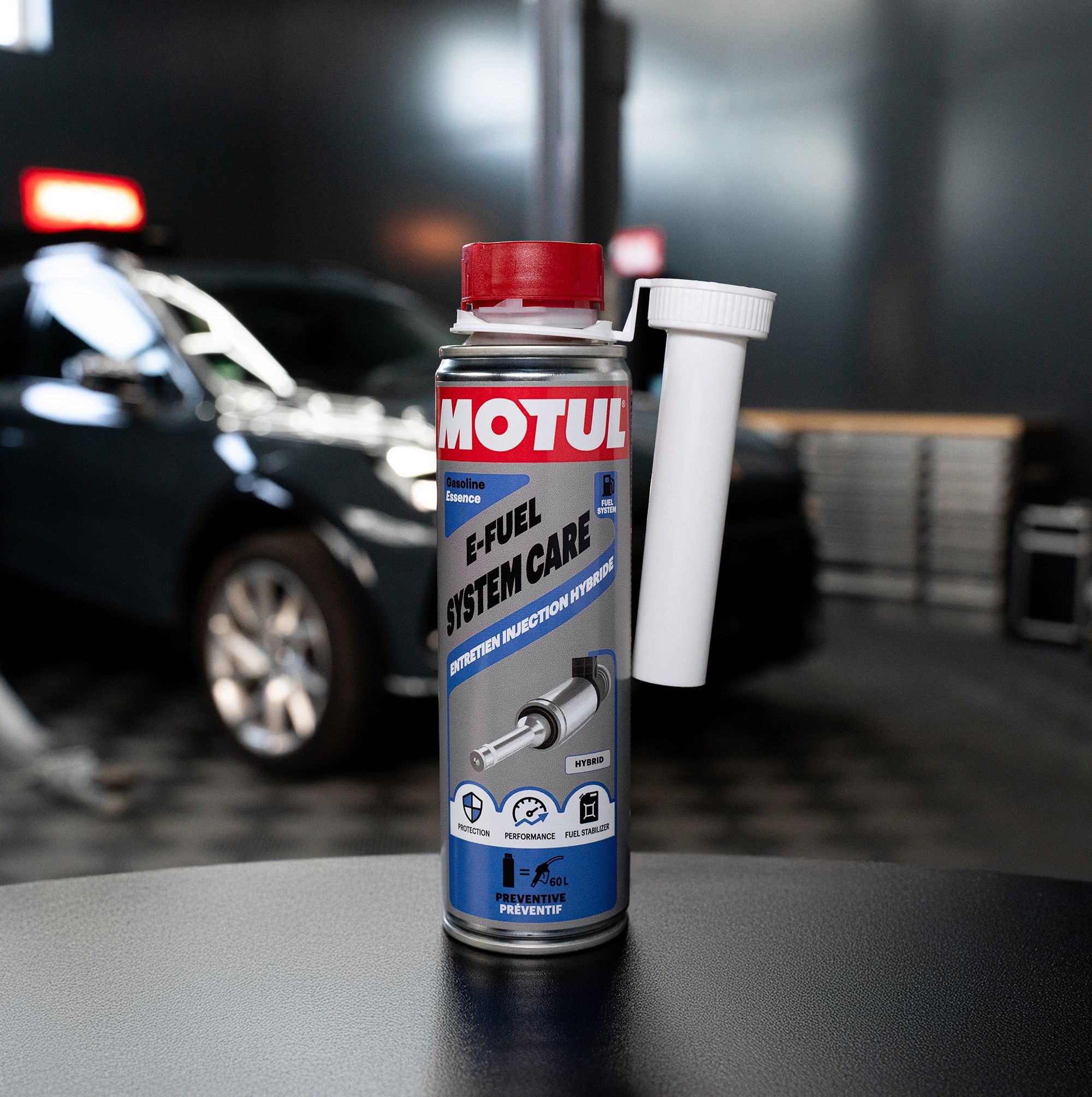
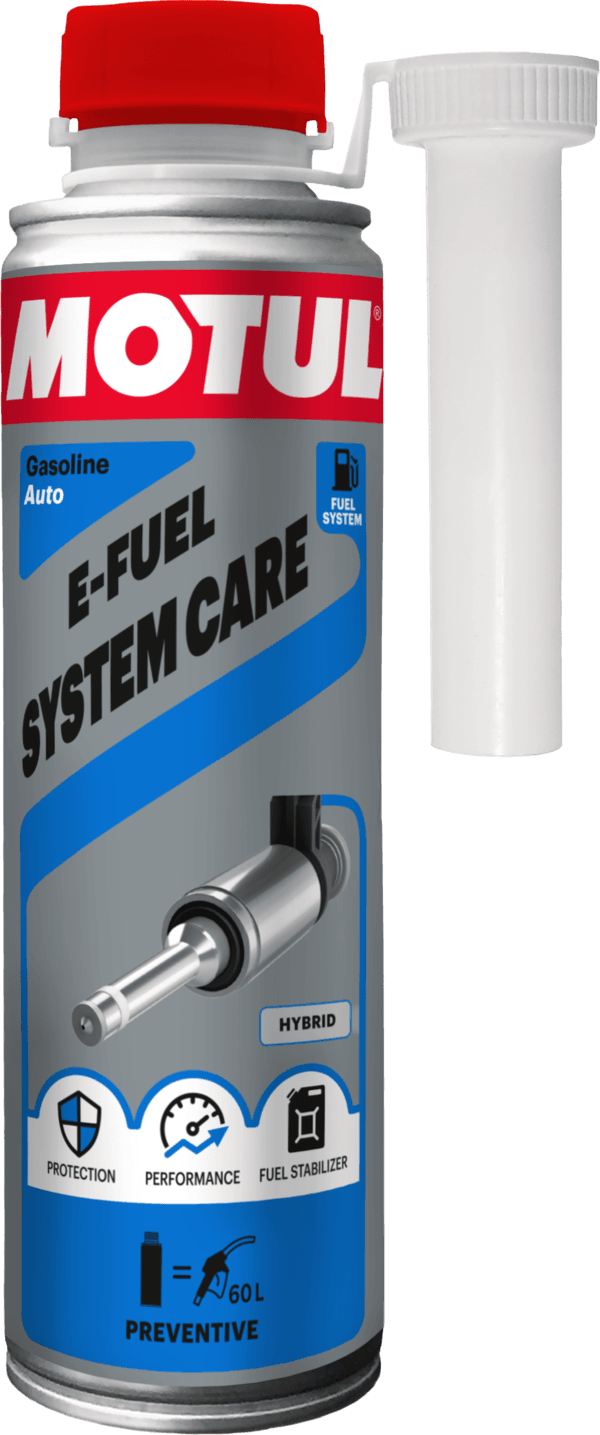
Perfect fit for the hybrid: Motul additives protect combustion engines even in changing application profiles
Cologne, August 2026 — They are called “alternative drives” because they accompany the transition from “combustion engines” to pure electric mobility. In plug-in hybrid drives in particular, gasoline engines generally share the drive work with an electric motor. To help gasoline engines better meet these particularly demanding challenges, there is a fuel additive from Motul: E-Fuel System Care ensures that irregular operation does not have any loss of performance or adverse effects on the service life of the gasoline engines. The Motul Diesel System Clean additive for diesel hybrids has a similar effect.
People often talk about transition technology, but it will remain even longer: Hybrid drives, i.e. the joint drive of internal combustion engine and electric car drives, will probably continue to be manufactured beyond 2035. Specifically, it concerns so-called REEV (Range Extender Electric Vehicle), HEV (Hybrid Electric Vehicle) and PHEV (Plug-in Hybrid Electric Vehicle) vehicles.
Different operating states increase contamination From a technical point of view, combustion engines in HEV and PHEV are particularly challenged. Depending on the driving profile, the gasoline or diesel engine only starts sporadically because the electric motor can easily move the vehicle alone over shorter distances. But when the power of both drives is required, the combustion engine must start in fractions of a second and deliver power very quickly — usually without the normal start and warm-up phase. As a result of this irregular operation and significantly longer operating breaks, engines with direct gasoline injection in particular can become more contaminated. Drivers can counteract this risk by adding a Motul additive to the tank: E-Fuel System Clean cleans dirt in the combustion chamber and stabilizes the fuel in the event of longer refueling breaks.
The technical background: “HEV and PHEV often use turbocharged downsizing gasoline engines with direct injection,” explains Alexander Hornoff, Technical Support Manager at Motul. “Because of the hybrid operating concept, the combustion engine is often switched on after extended periods of downtime and does not always reach its optimal operating temperature. At the same time, load changes and operating phases with medium to high specific loads occur regularly. Under these conditions, more deposits can form on the high-precision injection nozzles. As the formation of deposits increases, the atomization pattern and fuel dosing deteriorate, which can have a negative effect on efficiency, power delivery and emissions behavior. In the long term, this may result in additional loads on individual components of the internal combustion engine. ” In addition, with PHEV vehicles whose batteries are consistently charged at the charging station, a full tank can remain unused in the tank for months and chemically change. Unstable fuel can cause additional contamination in the combustion chamber if the internal combustion engine is again “at full throttle” after such a break.
Development of Motul's additive know-how The E-Fuel System Clean additive was developed specifically for the challenges of gasoline engines used in hybrid drives. “In addition to the clean-up function, the product has fuel-stabilizing properties; they counteract the quality-related aging of the fuel during longer periods of time in the tank,” explains Hornoff. The product benefits from the know-how that Motul has developed with its additives for all internal combustion engines. For example, the product GDI Clean is already available for gasoline engines with direct injection, which can reduce and remove contaminants that build up over prolonged operation. “For E-Fuel System Care, we have also integrated a fuel-stabilizing function that is specifically designed for the operating conditions of gasoline hybrid vehicles. ”
For diesel hybrid engines that are not so widely used, Motul recommends the Diesel System Clean additive designed for diesel vehicles, which counteracts or removes the specific contaminants and soot formation during diesel combustion. “Since diesel fuel maintains a constant fuel quality over extended storage and downtime, the diesel hybrid has no comparable requirement for additional fuel stabilization similar to that of gasoline fuels,” explains Hornoff.